2025
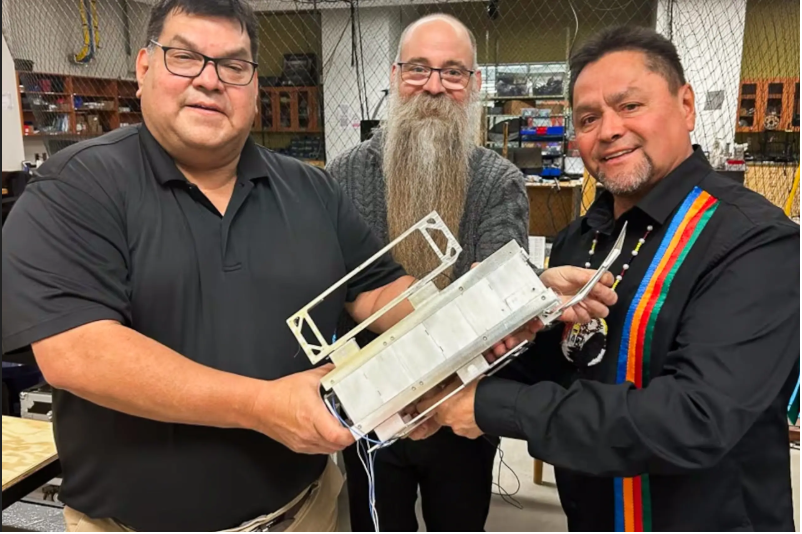
What does Indigenous storytelling say about the moon? We asked alum Rockford McKay, who’s partnering with UM to inform lunar navigation.
He says the satellite team will have to use stars and landmarks and come up with a system of navigation.
“Indigenous people have been doing that for time immemorial.”
Over the last 20-plus years, McKay, a storyteller who works with Manitoba teachers and youth, has travelled to northern communities to bring science and the stars to life in remote communities through traditional teachings.
Read more here
2023
University of Manitoba satellite set to study the origins of asteroids
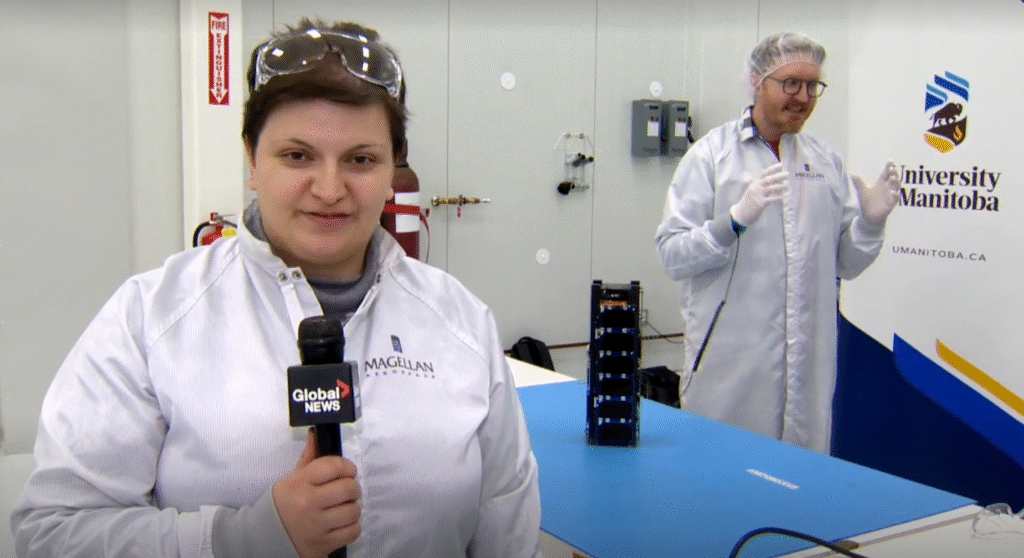
A satellite created by University of Manitoba engineering students is scheduled to be launched to the International Space Station in June.
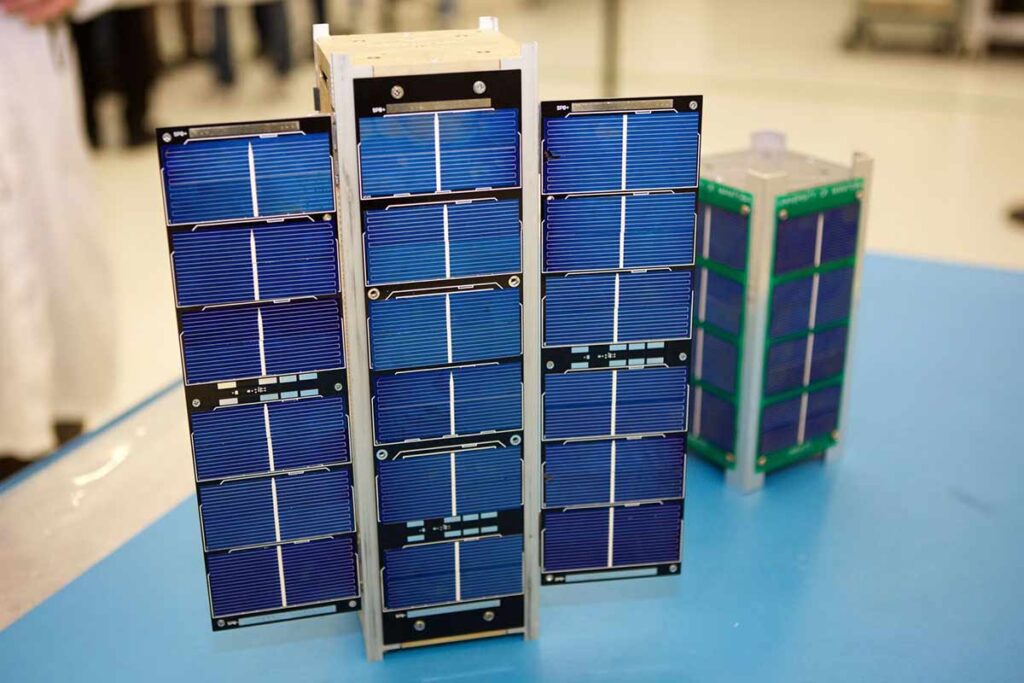
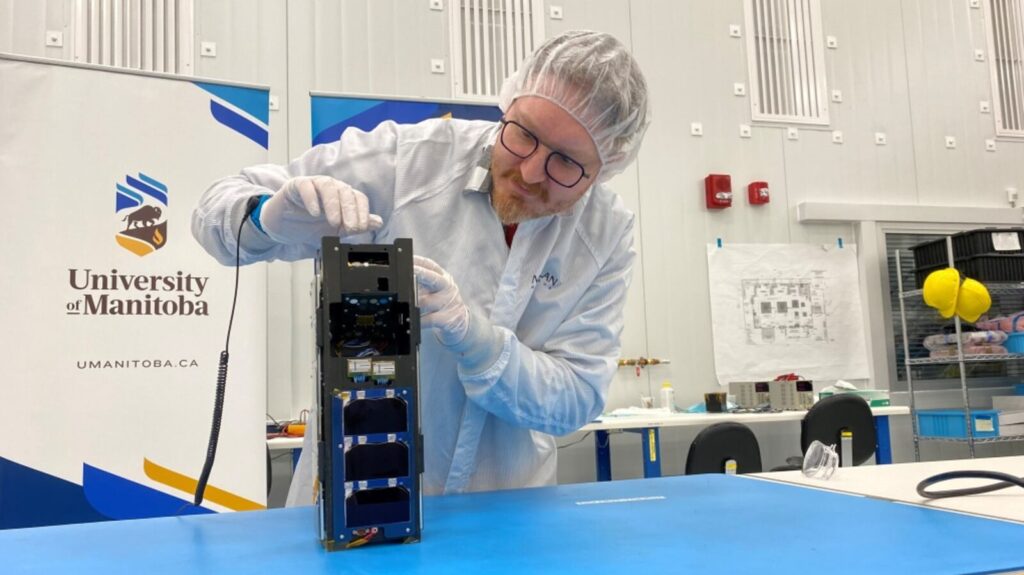
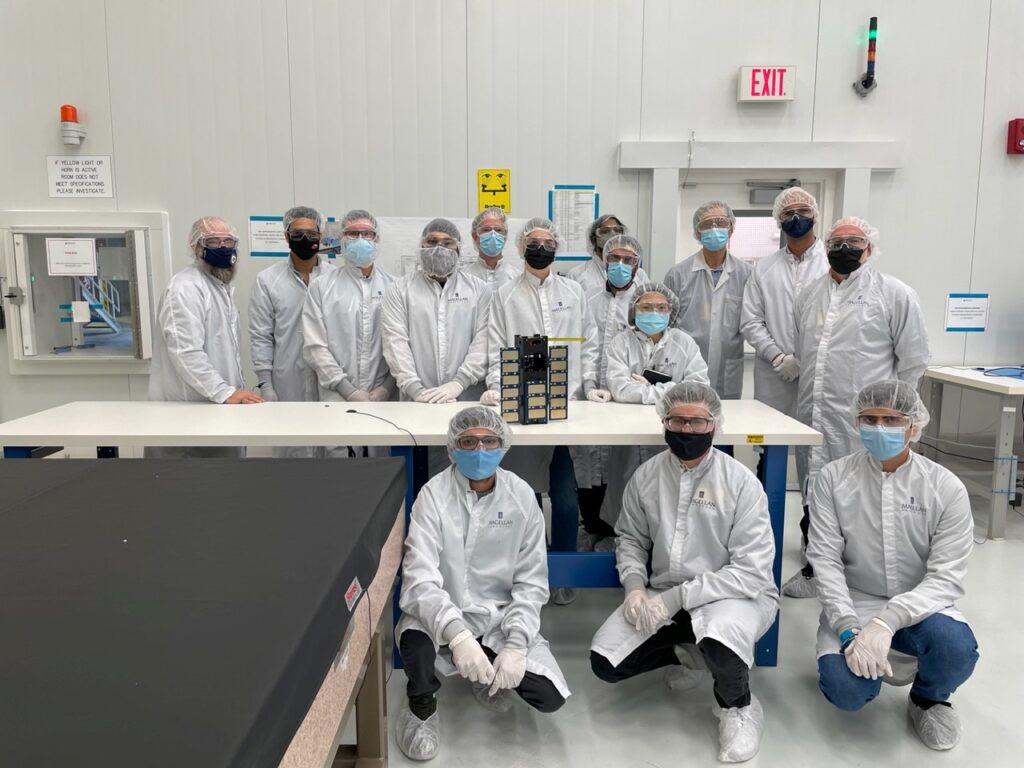
Designed to study how space conditions affect the composition of asteroids and the moon, the satellite — about the size of three stacked Rubik’s cubes, and known as Iris — will help researchers on Earth better understand those effects when studying meteorites (rocks that have fallen to Earth from space).
Read more here
Manitoba-designed satellite heading to International Space Station
A project created by students and faculty at the University of Manitoba will be blasting off into space later this spring to conduct research.
A Cube Satellite (CubeSat) known as Iris developed by the U of M has been selected by the Canadian Space Agency to be transported to the International Space Station. It will eventually be placed into space for asteroid research.
“It’s amazing to be able to say at 23 that I get to contribute to a satellite going into space,” said Andrew Bowman, project manager for the Iris CubeSat mission. “And for all of us who contribute to this, it’s amazing to start our careers in aerospace engineering with an actual satellite actually going to the ISS and into space.”
Read more here
Manitoba-designed satellite set to take to the skies, carrying the work of U of M students
Students at the University of Manitoba have debuted a satellite that’s set to launch into space in just a few months. The satellite is only about the size of a milk carton but it’s the result of years of precise engineering. It’s called the CubeSat — nicknamed Iris — and students have been working on it for over four years.
In June, it will launch on the SpaceX rocket from Cape Canaveral up to the International Space Station and the cameras inside will take pictures to see how their colours change when exposed to space radiation.
“The astronauts will unpack it from the Dragon capsule, they’ll put it into a special deployer, and they’ll open up the window and shoot it out of the space station for us,” said Philip Ferguson, project lead
Read More here
2022
Actually, it is rocket science
UM’s first satellite is expected to launch in 2023
November 18, 2022 —
Listening to Philip Ferguson list off the projects he is involved with, you’d think he wouldn’t have time to sit and talk with me about them.
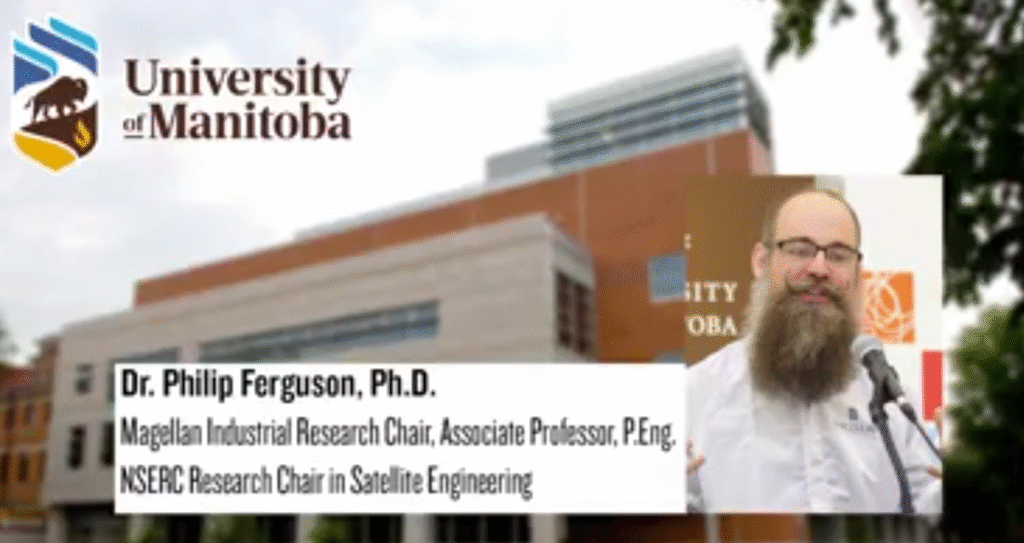
Ferguson is an associate professor in mechanical engineering, the NSERC / Magellan Aerospace Industrial Research Chair in Satellite Engineering at UM, and the director of STARLab, a suite of projects based in the Price Faculty of Engineering and where he is telling me about his work.
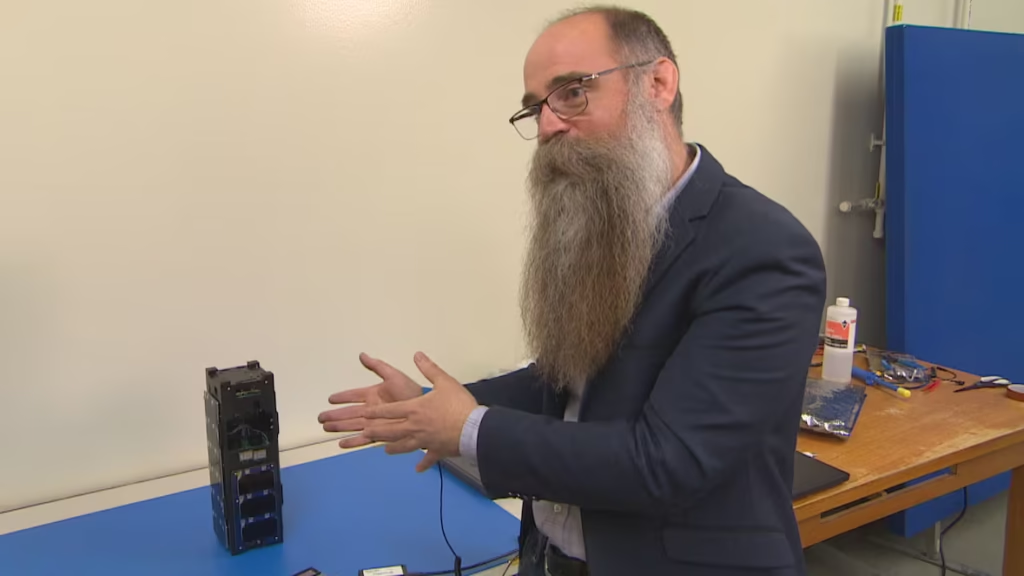
As we talk, beside me on a table is a cube-shaped structure about half a metre on each side, looking like a half-made Meccano kit or something constructed from an ancient Tinkertoy set. Across the room from us is a long wooden trough filled with sand, and what appears to be a truck with wheels at one end. In the centre of the room is a large area encompassed by netting. Scattered around the room are tables with computers where grad students are busily poring over data and displays. It looks rather like the set of a Big BangTheory episode.
Read More here
2021
PODCAST : Empowering Communities Through Space with Dr. Philip Ferguson
Dr. Ferguson is an Associate Professor in the Department of Mechanical Engineering at the University of Manitoba and holds the NSERC / Magellan Aerospace Industrial Research Chair in Satellite Engineering. His work aims to improve the reliability and accessibility of space technology through research into new satellite control and manufacturing technologies. We got to speak to him about CubeSats and how young people can get more involved in space.
Listen here
2020
PODCAST: The Evolution of Aerospace (Ft. Dr. Philip Ferguson)
Dr. Philip Ferguson is an Associate Professor at the University of Manitoba. Listen to Dr. Ferguson’s story on how he got into to aerospace and how the industry has changed over the years. With is vast knowledge of space and the industry this episode helps us to understand how far the aerospace industry has come and especially satellites.
Listen here
COVID-19 and its effect on academia in the space community
COVID-19 is leaving no aspect of our lives untouched including at universities where students and professors have had to adapt to our new reality. To better understand how COVID-19 is affected different parts of the space community SpaceQ has been talking to and interviewing people.
Today my guest on the SpaceQ podcast is with someone from the academic world who teaches students and runs a research lab.
That professor is Philip Ferguson from the University of Manitoba where he’s the NSERC / Magellan Aerospace Industrial Research Chair in Satellite Engineering. Ferguson teaches undergrad and grad courses and manages a satellite engineering lab. He’s also married, has two children, two dogs and lives outside of Winnipeg on a hobby farm. The interview isn’t just about the academic life of Ferguson and his students. COVID-19 is affecting every part of our lives. So we get a little personal with our interview.
Read More here
Pushing the Boundaries of Aerospace
By any stretch of the imagination, the idea of space and space exploration is a rather lofty one; but that has hardly stopped Dr. Philip Ferguson from pursuing it relentlessly. “One of the things we always talk about
is to make space accessible to people or make space for innovation,” said the classically trained aerospace engineer who heads the Space Technology and Advanced Research Laboratory (STARLab), a collaborative enterprise of the University of Manitoba, Magellan Aerospace, and the Natural Sciences and
Engineering Research Council of Canada.
Read More here (Page 12)
2019
UMSATS team vindicated with win Student satellite society charting lofty flight path
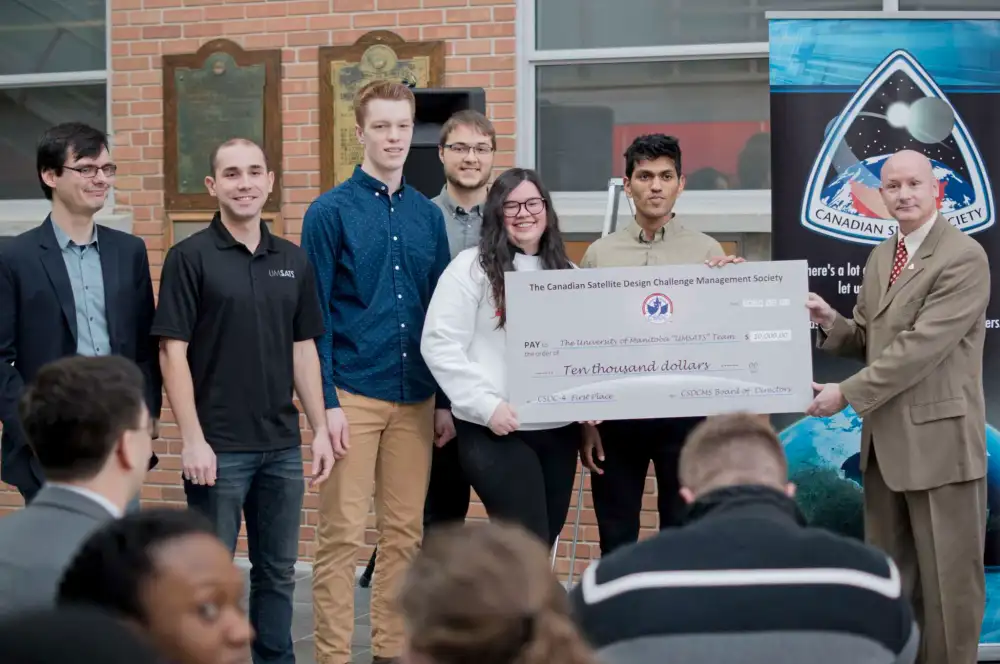
A group of university students are orbiting in new heights after winning a major prize from the Canadian Space Agency.
The University of Manitoba Space Applications and Technology Society (UMSATS) won the fourth annual Canadian Satellite Design Challenge, after eight years of attempting to design and build a cube satellite worthy of the award.
Along with bragging rights, UMSATS earned a $10,000 cheque to help bolster technology in their lab and drive innovation in their projects.
Read More here
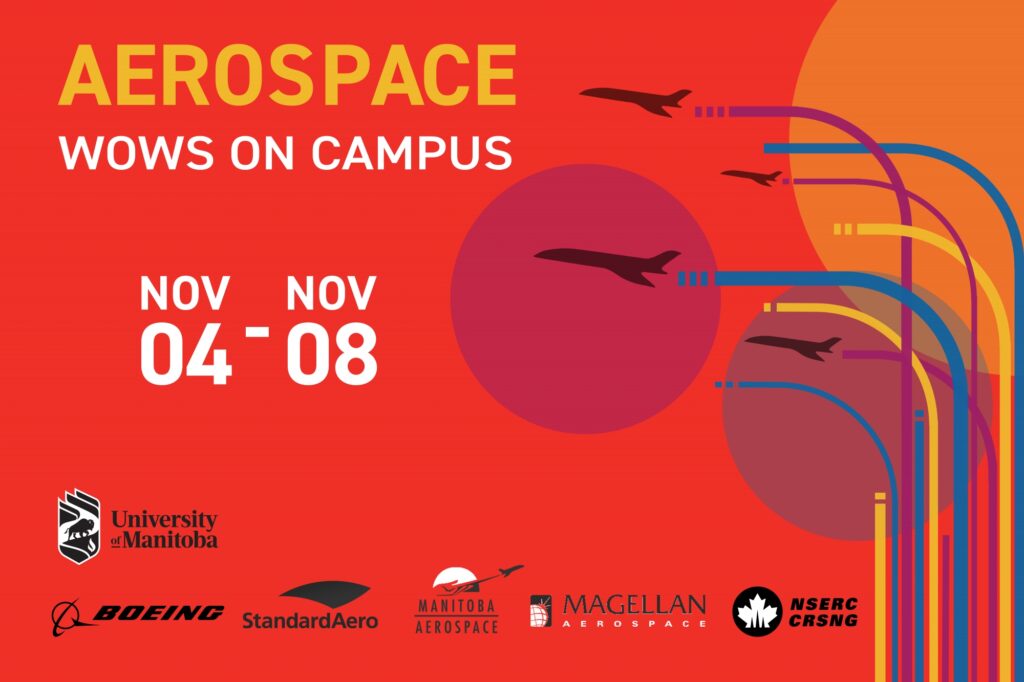
Aerospace WOW on Campus
This week-long event is all things aerospace and features industry tours, information sessions, tradeshow and much more.
Please find a complete list of events here:
Monday, November 4
- Pancake Breakfast, 10AM, EITC Atrium
- Keynote Speaker Philip Ferguson, 10:30AM, E2-165
- Industry Tradeshow, 10AM – 2PM, EITC Atrium
- H.I.R.E.D with Manitoba Aerospace, 5:30PM, E2-110
Tuesday, November 5
- Industry Tour with BOEING*, click here to register
Wednesday, November 6
- Industry Tour with Magellan Aerospace*, click here to register
Thursday, November 7
- Industry Tour with StandardAero*, click here to register
Friday, November 8
- Panel Discussion with MB Aerospace Industry leaders, 11:30AM – 1PM, E2-22
Read More here
Canadian Participation in Moon landings
To mark the 50 year anniversary of the moon landing, Dr. Philip Ferguson spoke with CBC Manitoba’s Up to Speed about what the moon landing meant for Canada and what’s next for the aerospace industry.
Listen here
More News: Manitoba Students help with satellite design -CTV Winnipeg Evenining News
2018
CSA to help students design, build and launch their own satellites
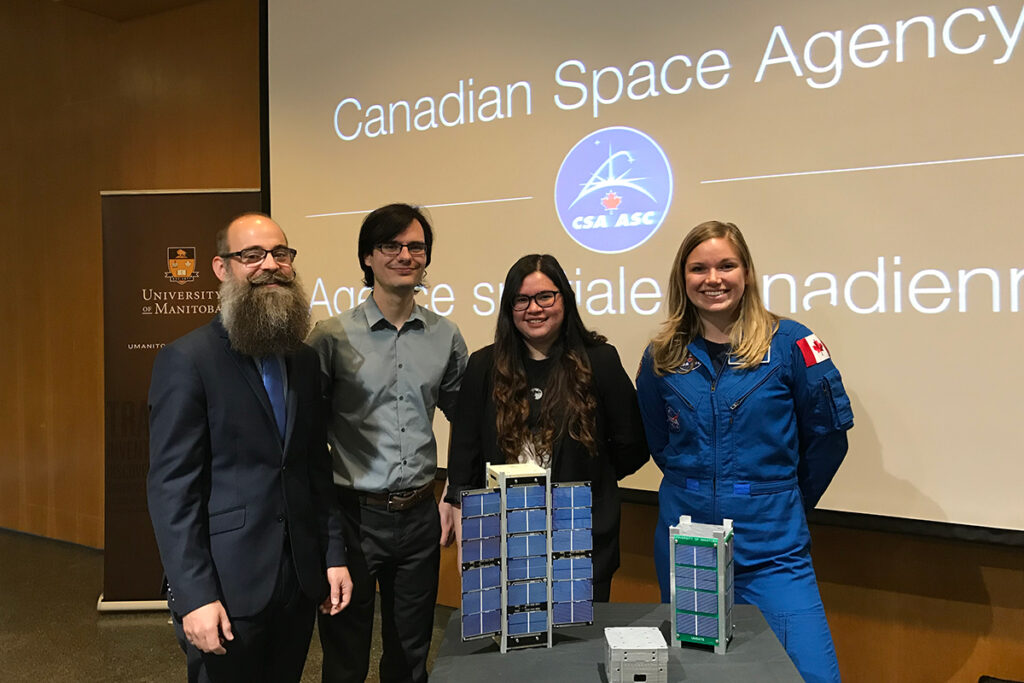
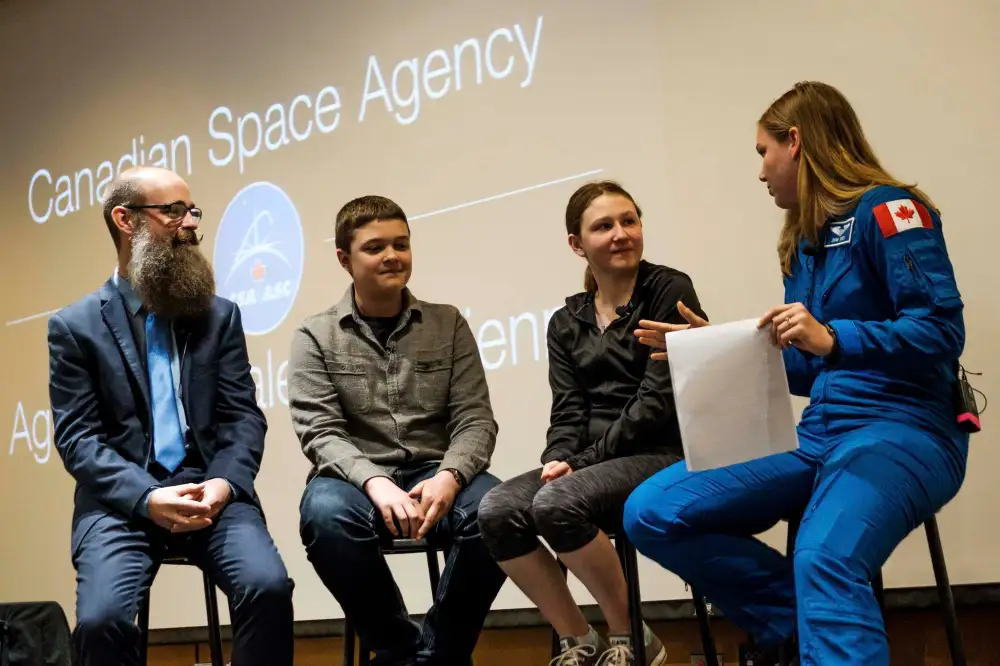
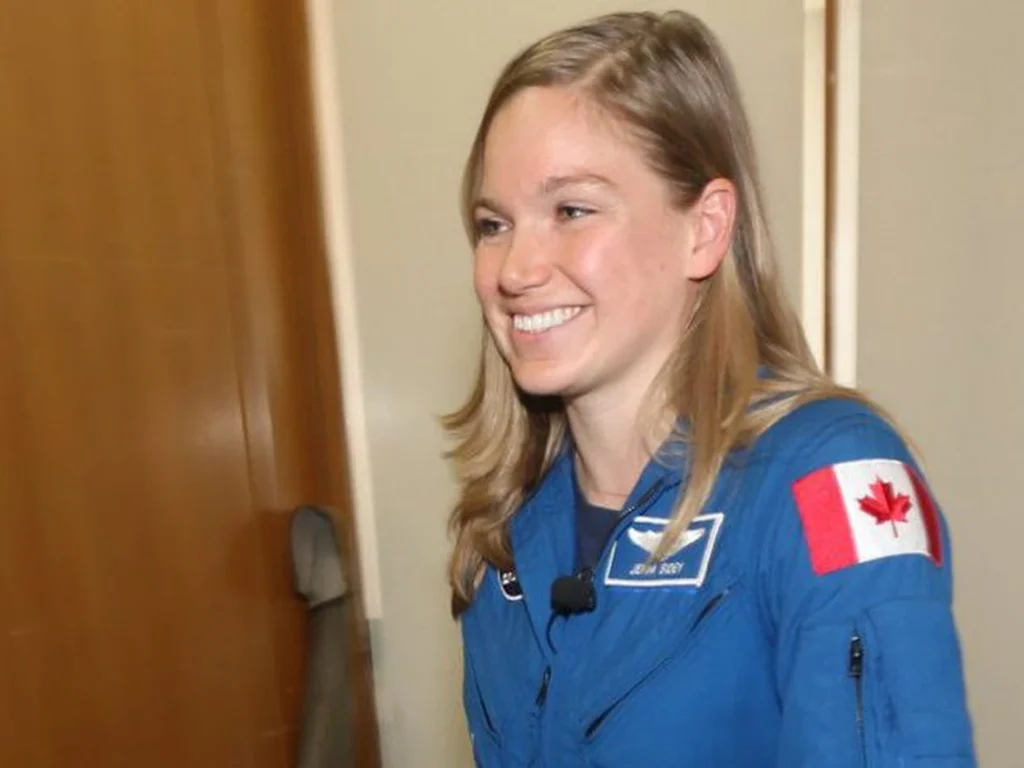
Today, at an event hosted by the University of Manitoba, Canadian Space Agency (CSA) astronaut Jenni Sidey announced the teams selected to take part in the CSA’s Canadian CubeSat Project.
The team based at the U of M is led by Dr. Philip Ferguson, professor of mechanical engineering with the Faculty of Engineering. His research focuses on satellite navigation, control and manufacturing technologies that could reduce the cost and cycle time of designing and executing satellite missions.
For the CubeSat project at the U of M, the ManitobaSat-1 leadership team includes: Dr. Witold Kinsner, electrical and computer engineering; Dr. Edward Cloutis, University of Winnipeg; Dr. Regina Lee, York University; Ms. Maria Nickel, Interlake School Division; Mr. Corey Mack, Magellan Aerospace, Winnipeg; and a group of more than 25 students who will actually design and build the satellite.
Read More here
More news: Is the University of Manitoba the Next Small Satellite Innovation Hub?
U of M to take part in student space program
Groups will design, build and operate mini-satellites
A group of University of Manitoba students found out Friday their work someday will boldly go where few have gone before.
The U of M team is one of 15 groups of post-secondary students the Canadian Space Agency announced will receive funding to participate in the CubeSat project. A news release says grants range from $200,000 to $250,000.
CubeSat is a new national student space initiative in which teams of students from across Canada will design, build and operate their own mini-satellite (CubeSat) that will be launched into space. There’s at least one representative from each province and territory.
Read More here
New NSERC Chairs announced for U of M
The first is a new Industrial Research Chair (IRC) in Satellite Engineering established at the U of M through a partnership between the Natural Sciences and Engineering Research Council of Canada (NSERC) and Magellan Aerospace. The IRC will receive a total of $1.25 million in funding over the next five years from NSERC and Magellan Aerospace.
This new IRC will be held by Dr. Philip Ferguson, who has more than 10 years of research and high quality personnel training experience in this field. Ferguson was recently the vice president of product development for PrecisionHawk (Toronto, ON), an international technology firm dedicated to the research and development of airspace platforms for low altitude flight. He has also served in both research and engineering management roles at several aerospace companies, including Magellan Aerospace Winnipeg.
Read More here
Stonewall School space club gets ‘once-in-a-lifetime’ opportunity
Six Grade 8 students from Ecole Stonewall Centennial School are getting an opportunity that’s literally out of this world.
The students from the school’s space club are making what’s called a gnomon, or a sundial, as part of a collaboration with the University of Manitoba and York University, which will eventually lead to a mini-satellite called a CubeSat being launched into space to study space rocks as part of the Canadian CubeSat Project.
Read More here
More news:
- Ace Burpee’s 100 fascinating Manitobans of 2018
- U of M students win national satellite building competition
- University of Manitoba launching into the space age
2017
Engineering Welcomes New Faculty Members
Dr. Philip Ferguson, Associate Professor, Mechanical Engineering
Dr. Philip Ferguson holds Bachelor’s degree in Engineering Science from the University of Toronto and a Masters and PhD in Aerospace Engineering from the Massachusetts Institute of Technology. His doctoral research focused on astronaut brain modeling to predict control adaption in microgravity. Following graduate school, he developed space control, navigation and power systems for small space telescopes at Microsat Systems Canada Inc. and the RADARSAT Constellation Mission at Magellan Aerospace, Winnipeg. He also served as the Vice President of Product Development at PrecisionHawk Unmanned Systems Inc., where was responsible for all drone systems engineering, research and production. Dr. Ferguson’s research studies spacecraft manufacturing and control technologies that can improve satellite reliability while simultaneously reducing the cost and design schedule, thereby improving the accessibility of space.
Read More here