
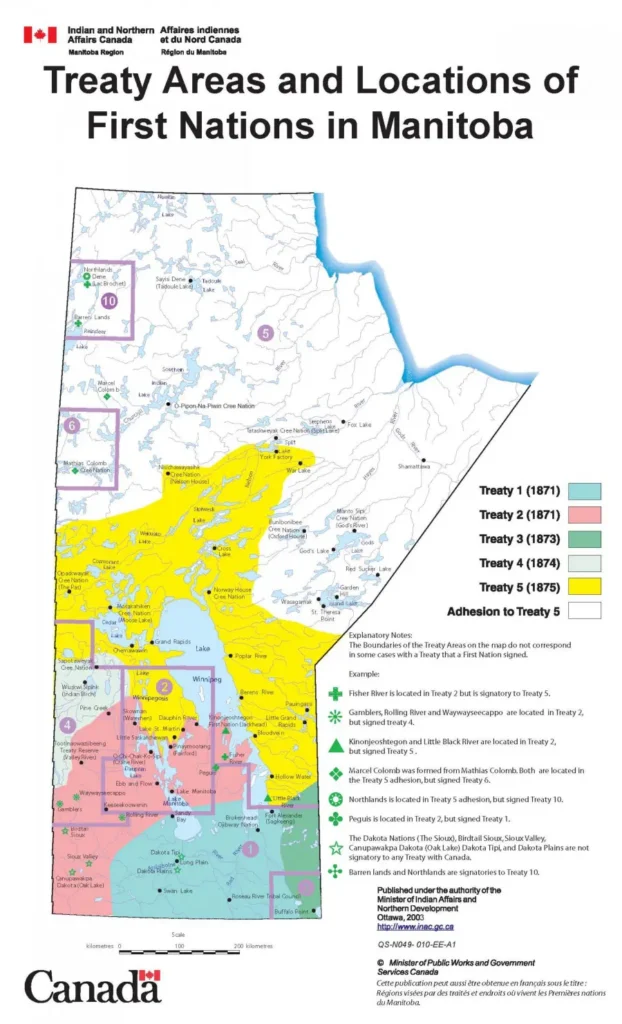
STARLab is located at the University of Manitoba and Magellan Aerospace, Winnipeg, on Treaty 1 territory. We share the unceded and traditional lands of the Anishinaabeg, Ininiwak, Anisininewuk, Dakota Oyate, Dene, and Inuit, as well as the National Homeland of the Red River Métis. Our drinking water comes from the Shoal Lake 40 First Nation, and we routinely benefit from the guidance, teaching, and wisdom from the Indigenous elders we are fortunate enough to learn from.
Canada’s history with Indigenous communities is shameful, requiring a firm and unwavering commitment to seeking, determining, and voicing the truth, while simultaneously making progress towards reconciliation. STARLab acknowledges the harms and mistakes of the past and is dedicated to moving forward with Indigenous communities to co-develop research in the spirit of collaboration.
Co-development is an easy word to say, but much more difficult to do. Co-development means embracing Indigenous partnerships at the highest level. At STARLab, we do not conduct research for Indigenous communities, but rather the Indigenous communities co-lead and co-direct the research. Indigenous community members are an integral part of STARLab’s research and leadership team, directing, guiding, and inspiring as we grow and learn together.
Co-development is, at times, messy and difficult; it can be uncomfortable and spiritually challenging as we grapple with previous transgressions and their ongoing impacts. But STARLab embraces this challenge, because it is through these interactions that we grow as researchers, as engineers, and as a community. We refuse to ignore truth because it is painful and arduous. We embrace the lived experiences of the communities we work with, while honouring and respecting their traditions and knowledge.
Specifically, STARLab acknowledges and honours the co-developed research we do with the Inuit people from Chesterfield Inlet, Nunavut and the Inuit and Cree First Nation people from Churchill, Manitoba. These communities have an intimate relationship with the land, the sea, the air, and space. These communities are full of researchers: scientists, engineers, physicians, artists, musicians, and social scientists. These community researchers bring centuries of knowledge to our collective research on aerospace systems aimed to better understand and cope with the rapidly changing arctic environment. Our research partnership with these communities drives us every day. We are honoured to be conducting co-developed research with them – on their land, in their communities, and on their terms.